EIN Social Updates & Insights
Explore Enterprise Industry Network announcements, business perspectives, and updates for sellers, buyers, and business owners, alongside EIN Business Listings resources.
Explore Business Listings Insights
Read EINBL articles or watch videos about listing visibility, buyer interest, opportunity presentation, and preparing your business for the market.
Read EINBL Blog → Watch EINBL Videos →Latest EIN Social Updates
Need Funding to Expand Your Business? Calculate the Full Capital Requirement First

Nov 9, 2026
Planning to expand your business?
The first funding number that comes to mind may not be the amount the expansion actually requires.
A new location may need more than a lease deposit.
New equipment may require installation, training and working capital.
Additional sales may require more inventory, payroll and operating cash before the new revenue arrives.
Before exploring business expansion funding, calculate the complete capital requirement.
Start With the Expansion Goal
First define what the business is trying to accomplish.
The expansion might involve:
- Opening another location
- Adding equipment or production capacity
- Hiring employees
- Increasing inventory
- Expanding into a new market
- Adding products or services
- Increasing sales and marketing capacity
The financing need should connect directly to that business objective.
Do Not Budget Only for the First Expense
Expansion projects often involve several related costs.
For example, opening a new location may involve rent deposits, improvements, equipment, inventory, staffing, marketing and operating expenses before the location reaches expected sales levels.
If the funding request covers only the first major expense, the business may still face a cash-flow gap while completing the project.
Include Working Capital
Growth can consume cash before it produces additional cash.
A business may need to pay employees, suppliers, utilities and other operating expenses while waiting for the expansion to begin generating revenue.
That makes working capital an important part of many expansion budgets.
Think About Equipment and Installation
If expansion requires equipment, consider the complete acquisition cost.
Depending on the project, costs may extend beyond the purchase price and involve delivery, installation, setup, training or other expenses.
The business should understand the total requirement rather than budgeting only for the equipment itself.
Factor in Hiring
Expansion may also require people.
New employees can create costs before they begin contributing fully to revenue.
Owners may need to consider recruiting, onboarding, training, payroll and other employment-related expenses as part of the expansion plan.
Inventory Can Tie Up Capital
A growing business may need more inventory before additional sales occur.
That can create a timing gap between paying suppliers and receiving customer revenue.
Businesses that require substantial inventory should consider how much additional operating cash may be tied up during expansion.
Marketing May Need Its Own Budget
A new location, service or market may not automatically produce immediate customer demand.
The expansion plan may therefore include marketing, advertising, sales development or customer-acquisition expenses.
Those costs should be considered before calculating the total funding requirement.
Build in a Realistic Timeline
Expansion rarely produces full revenue on the first day.
There may be a period between making the investment and reaching the expected level of sales.
Owners should understand how long the business may need to support additional expenses before the expansion begins contributing sufficient cash flow.
Match the Funding Structure to the Need
Different financing options may be better suited to different business needs.
A longer-term expansion project may call for a different financing structure than a short-term cash-flow gap.
For example, some business owners searching for a term loan with an EIN may be trying to finance a defined expansion investment over a longer repayment period.
An Employer Identification Number can identify the business, but the EIN itself does not determine financing eligibility.
Providers may also consider factors such as credit, time in business, revenue, cash flow, existing debt and other financial information.
Consider the Existing Business Too
The original business still needs to operate while the expansion is underway.
Do not commit so much cash to growth that the existing operation becomes unnecessarily strained.
Review current obligations, available reserves and expected operating cash flow before taking on another financing commitment.
Calculate the Funding Need From the Bottom Up
Instead of starting with the question:
“How much can I borrow?”
Start with:
“What will this expansion actually cost from beginning to stable operation?”
Then calculate the financing requirement from the underlying expenses and timing.
Expansion Funding Should Support a Complete Plan
A stronger capital plan connects:
The business objective.
The required investment.
The timing.
The expected operating needs.
And the company’s ability to support the resulting financing obligation.
EIN Business Funding provides a starting point for U.S. business owners exploring potential financing for expansion and other business needs.
Funding availability, eligibility, limits, costs, personal-guarantee requirements and terms vary by provider and applicant circumstances. Pre-qualification, an application or an initial review does not guarantee financing.
Frequently Asked Questions
What costs should I consider when seeking business expansion funding?
Depending on the expansion, costs may include space, equipment, inventory, hiring, marketing, setup expenses and working capital required while the business waits for additional revenue.
Why is working capital important during a business expansion?
Expansion can increase expenses before it increases cash collections. Working capital may help support payroll, suppliers, inventory and other operating costs during that period.
Can I get a term loan with an EIN for business expansion?
An EIN may be part of a business financing application, but the EIN alone does not establish eligibility. Providers may also evaluate factors such as credit, operating history, revenue, cash flow and existing debt.
Should I borrow the maximum amount available for expansion?
Not necessarily. A more useful approach is to calculate the actual project requirement, consider available business resources and understand the cost and repayment obligation before selecting a financing amount.
Take the Next Step
Subscribe on YouTube:
https://www.youtube.com/@enterpriseindustrynetwork
Explore EIN Business Funding:
https://www.einbf.com/get-funded/
Exit. Acquire. Invest.
Explore Enterprise Industry Network
https://enterpriseindustrynetwork.com/
Raising Capital? Target Investors Who Actually Fit the Round

Nov 6, 2026
Raising capital?
It can be tempting to build the largest possible investor list and start sending the pitch everywhere.
But more names do not automatically create better fundraising opportunities.
A more useful question is:
Does this investor actually fit the round we are raising?
Investor Fit Starts With Stage
Different investors focus on different stages of company development.
Some primarily consider very early-stage opportunities.
Others may focus on companies that already have meaningful revenue, established traction or a more developed operating history.
A company can have an attractive opportunity and still be outside an investor’s preferred stage.
Before outreach, understand whether the company’s maturity is reasonably aligned with the investor’s mandate.
Check the Sector
Many investors concentrate on particular industries, technologies or business models.
That specialization may reflect experience, investment strategy, portfolio construction or internal expertise.
A founder raising capital for a manufacturing company, healthcare platform, software business or consumer brand may therefore encounter very different groups of potential investors.
Sector relevance should be considered before adding an investor to the target list.
Understand the Investor’s Typical Check Size
Investment amount can be one of the fastest ways to identify a mismatch.
A company seeking a relatively modest amount may not fit an investor that normally participates in much larger rounds.
Likewise, an investor whose normal investment size is substantially below the company’s needs may not be the right lead for the round.
The exact amount an investor is willing to deploy varies by opportunity, but understanding the general investment range can make outreach more focused.
Consider Geography
Some investors operate broadly.
Others may focus on specific states, regions, countries or markets.
Geography may also matter because of regulatory considerations, market familiarity, portfolio strategy or the investor’s ability to support the company.
If an investor’s mandate does not include the company’s geography, a strong pitch may still be outside the investor’s scope.
Look at the Investor’s Mandate
Stage, sector and geography are only part of investor fit.
An investor may also have preferences involving:
- Business model
- Revenue profile
- Ownership position
- Investment structure
- Board involvement
- Follow-on strategy
- Portfolio concentration
- Other investment criteria
Founders should not assume that every investor using the words “venture capital” or “growth capital” evaluates the same opportunities.
Do Not Judge Investor Fit Only by Brand Recognition
A well-known investor may look attractive on an outreach list.
But brand recognition does not necessarily mean strategic fit.
A smaller or less visible investment firm may be more relevant if its mandate closely matches the company’s stage, sector and capital requirements.
The goal is not to build the most impressive investor list.
The goal is to build the most relevant one.
Review the Portfolio
An investor’s existing portfolio can sometimes provide useful context.
It may help founders understand:
- Industries the investor understands
- Stages the investor typically supports
- Types of companies already backed
- Potential competitive conflicts
- Patterns in investment strategy
Portfolio history does not guarantee that an investor will consider a similar company, but it can help inform outreach research.
Match the Investor to the Round
The same company may need different investors at different stages.
An investor that was appropriate for an earlier round may not be the right fit for the next one.
As the company develops, the capital requirement, risk profile, operating scale and investor expectations may change.
Investor targeting should therefore be connected to the specific round being raised now.
Build a Prioritized Investor List
Instead of treating every investor equally, founders can prioritize outreach.
A simple framework may include:
- High-fit investors
- Possible-fit investors
- Low-fit or uncertain investors requiring more research
This can help focus time and follow-up on the investors most likely to have a mandate that aligns with the opportunity.
Better Targeting Does Not Guarantee Investment
Even a strong investor-company fit does not guarantee interest or capital.
Investors may decline opportunities because of portfolio allocation, market conditions, timing, internal priorities, valuation, diligence findings or many other factors.
Investor fit improves relevance.
It does not remove investment risk or guarantee a positive decision.
Quality of Outreach Can Matter More Than Quantity
Before sending another pitch, ask:
- Does this investor invest at our stage?
- Does the sector fit?
- Is our capital requirement within the investor’s general range?
- Does the geography fit?
- Does the investment mandate appear relevant?
If several of those answers are clearly no, the investor may not belong near the top of the outreach list.
EIN Venture Capital provides a starting point for businesses preparing for capital discussions, investor targeting and potential capital-source alignment.
Investor mandates, interest, due diligence, valuation, terms and investment decisions vary by investor and opportunity. Researching investor fit or making an introduction does not guarantee investor interest, commitment or funding.
Frequently Asked Questions
What does investor fit mean when raising venture capital?
Investor fit refers to how well a company’s stage, sector, geography, capital requirement and other characteristics align with an investor’s mandate and investment strategy.
Why does an investor’s typical check size matter?
An investor’s usual investment range can help indicate whether the amount being raised is reasonably aligned with the investor’s strategy. Actual investment decisions and amounts vary by opportunity.
Should founders contact as many investors as possible?
Not necessarily. A more targeted list of investors whose mandates align with the company may create more relevant conversations than broad outreach to investors with little apparent fit.
Does a strong investor fit guarantee funding?
No. Investor fit only indicates potential alignment. Individual investment decisions also depend on diligence, valuation, portfolio strategy, timing, market conditions and many other factors.
Take the Next Step
Subscribe on YouTube:
https://www.youtube.com/@enterpriseindustrynetwork
Ready to present your opportunity to potential capital sources?
Start with EIN Venture Capital:
https://www.einvc.com/get-capital/
Exit. Acquire. Invest.
Explore Enterprise Industry Network
https://enterpriseindustrynetwork.com/
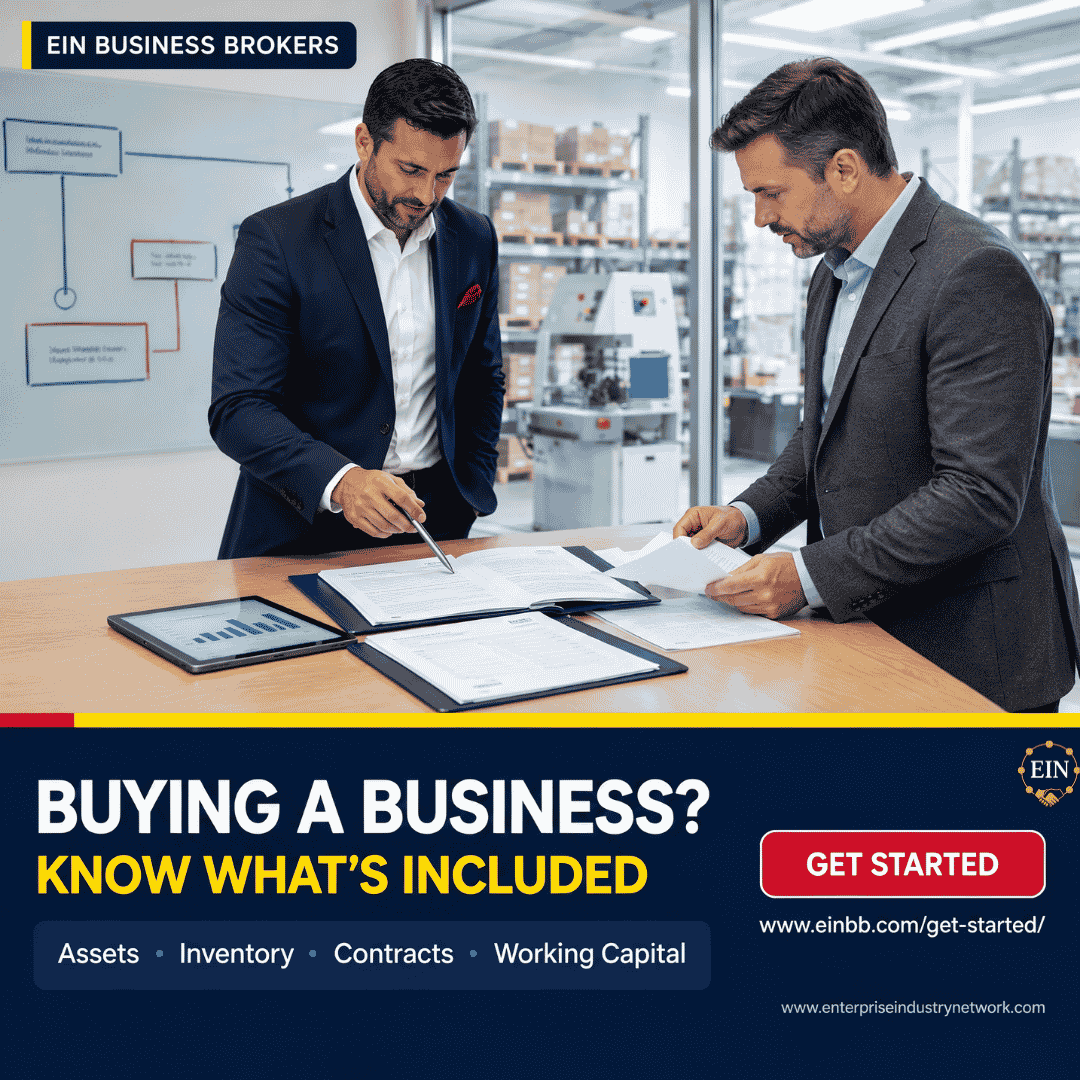
Buying a Business? Know Exactly What Is Included in the Deal
Nov 5, 2026
Buying a business?
Before focusing only on the price, ask a more basic question:
What exactly are you buying?
A business acquisition can involve equipment, inventory, contracts, intellectual property, customer relationships, leases and other assets or rights.
But not every item associated with the company is automatically included in every transaction.
Start With the Transaction Structure
Business acquisitions can be structured in different ways.
Depending on the transaction, a buyer may be acquiring selected business assets, ownership interests in the company or another negotiated combination of rights and obligations.
The structure can affect what transfers to the buyer and what remains with the seller.
Qualified legal and tax professionals should review the actual transaction structure and documents.
Understand Which Assets Are Included
A buyer should identify the physical and intangible assets expected to transfer with the business.
Depending on the company, these may include:
- Equipment
- Furniture and fixtures
- Vehicles
- Technology
- Websites and domain names
- Trademarks or other intellectual property
- Operating systems and processes
- Other business-specific assets
The purchase price should be evaluated in the context of what the buyer is actually receiving.
Ask How Inventory Is Treated
Inventory deserves specific attention.
Depending on the transaction, inventory may be:
- Included in the purchase price
- Priced separately
- Adjusted based on a closing inventory count
- Subject to other negotiated terms
A buyer should understand both the quantity and condition of the inventory expected to transfer.
Review Customer and Vendor Contracts
A business may depend on important agreements with customers, suppliers, distributors, landlords or other parties.
But a contract does not necessarily transfer automatically simply because the business changes ownership.
Some agreements may require consent, assignment or other steps.
Buyers should identify which contracts are important to continued operations and understand whether they can be transferred under the proposed deal.
Understand the Lease
If the business operates from leased premises, the location can be critical to the acquisition.
A buyer should understand:
- Remaining lease term
- Current rent
- Renewal options
- Assignment requirements
- Landlord consent requirements
- Other material lease provisions
A business purchase does not automatically guarantee that the buyer can continue occupying the premises under the same terms.
Know What Happens to Accounts Receivable and Payable
Another important question is how existing receivables and liabilities will be handled.
Depending on the transaction structure, amounts owed by customers or amounts owed to suppliers may remain with the seller or be treated differently under the purchase agreement.
The buyer should understand those details rather than assuming all cash, receivables or liabilities transfer with the company.
Don’t Forget Working Capital
The business still needs enough resources to operate after closing.
Even if the buyer acquires equipment, inventory and customer relationships, the company may still need cash for:
- Payroll
- Suppliers
- Rent
- Inventory replenishment
- Insurance
- Marketing
- Other operating expenses
Buyers should understand whether sufficient working capital is included in the transaction or needs to be provided separately.
Identify Intellectual Property and Digital Assets
For some businesses, a significant part of the value may exist in intangible assets.
These could include:
- Brand names
- Trademarks
- Domain names
- Websites
- Software
- Customer databases
- Content
- Other intellectual property
The buyer should understand what rights are transferring and whether those rights are properly documented.
Consider Licenses and Permits
Some businesses depend on licenses, permits, certifications or regulatory approvals.
Those approvals may not always transfer automatically to a new owner.
Before closing, buyers should understand what approvals are required to continue operating the business.
Look Beyond the Headline Purchase Price
Two businesses with the same asking price may represent very different transactions depending on what is included.
A buyer evaluating an acquisition should understand:
- What assets transfer
- How inventory is handled
- Which contracts continue
- What happens to the lease
- Whether intellectual property transfers
- How receivables and liabilities are treated
- How much working capital will be available after closing
The details ultimately need to be reflected in the applicable transaction documents.
Know What You Are Buying Before You Buy It
The purchase price tells you what the seller and buyer are discussing financially.
The transaction documents should tell you what the buyer is actually receiving.
Understanding both is essential when evaluating a business acquisition.
EIN Business Brokers provides a starting point for prospective buyers exploring business acquisition opportunities and navigating the transaction process.
Transaction structures, asset transfers, contract assignments, financing, due diligence findings and closing outcomes vary by opportunity. Buyers should obtain appropriate legal, accounting, tax and other professional advice for their specific acquisition. An inquiry or offer does not guarantee a completed transaction.
Frequently Asked Questions
Is everything owned by a business automatically included when I buy it?
No. What transfers depends on the transaction structure and negotiated purchase documents. Buyers should identify specifically which assets, rights and obligations are included.
Is inventory usually included in the purchase price?
It depends on the transaction. Inventory may be included, valued separately or adjusted based on an agreed closing inventory calculation.
Do customer contracts automatically transfer to a business buyer?
Not always. Some contracts may require assignment, consent or other conditions before they can transfer to a new owner.
Why does working capital matter when buying a business?
The acquired company still needs cash to support payroll, suppliers, inventory and other operating expenses after closing. Buyers should understand whether adequate working capital is included or must be provided separately.
Take the Next Step
Subscribe on YouTube:
https://www.youtube.com/@enterpriseindustrynetwork
Looking to acquire a business?
Start with EIN Business Brokers:
https://www.einbb.com/get-started/
Exit. Acquire. Invest.
Explore Enterprise Industry Network
https://enterpriseindustrynetwork.com/
Applying for Business Funding? Review Your Business Bank Statements First

Nov 4, 2026
Planning to apply for business funding?
Before submitting the request, look at something a financing provider may eventually ask to review:
Your recent business bank activity.
Depending on the financing product and provider, business bank statements can help provide a practical view of how money actually moves through the company.
Why Business Bank Statements May Matter
Annual revenue gives one view of the company.
Bank activity can provide another.
Depending on the financing path, providers may use banking and other financial information to better understand revenue activity, cash flow, existing obligations and the overall financial profile of the business.
Not every provider uses the same review process, but organized business banking can be an important part of funding readiness.
Look at Deposit Activity
Start by reviewing the deposits coming into the account.
Ask whether the activity generally reflects what you understand about the business.
For example:
- Are customer payments flowing into the business account?
- Are deposits relatively consistent or highly irregular?
- Are there clear seasonal patterns?
- Does recent activity generally align with the revenue information you plan to provide?
A financing provider may evaluate consistent deposits for some funding products.
Revenue and Cash Flow Are Not the Same
A company can generate strong sales while still experiencing periods of cash-flow pressure.
Money may leave the account for payroll, inventory, suppliers, rent, debt payments and other expenses before customer payments arrive.
This is why understanding the movement of cash can matter alongside the annual revenue figure.
Review Cash-Flow Consistency
Some financing providers may evaluate whether business cash flow appears consistent enough to support another financial obligation.
Before applying, understand:
- Typical monthly deposits
- Major recurring expenses
- Seasonal changes
- Current financing payments
- Periods when cash becomes tighter
The purpose is not to create a perfect banking history.
It is to understand your company’s actual financial pattern before someone else begins reviewing it.
Know Your Existing Obligations
Funding readiness also means understanding what the company already owes.
That may include:
- Business loans
- Lines of credit
- Business credit cards
- Equipment obligations
- Other financing commitments
Any new financing would exist alongside those obligations.
Your funding request should therefore be considered in the context of the company’s existing financial commitments.
Use a Dedicated Business Account
An established business bank account can make business activity easier to separate and understand.
Keeping business transactions organized through the business account may also make it easier to prepare financial information when documentation is requested.
The exact account requirements depend on the financing product and provider.
Make Sure the Application and Bank Activity Tell the Same Story
If the application states one level of revenue while recent business activity appears materially different, the provider may have additional questions.
There may be legitimate reasons for differences, including seasonality, timing or other business-specific circumstances.
The important thing is to understand those differences and be prepared to explain them accurately.
What About Business Funding With an EIN?
Business owners searching for financing may use phrases such as “business funding with EIN” because they want financing connected to their business entity.
An Employer Identification Number can help identify the company during an application.
But an EIN does not replace the broader financial review.
Depending on the funding option, business banking, revenue, cash flow, credit, operating history, existing debt and other information may also be considered.
Prepare Before the Provider Asks
Before applying, consider reviewing recent business banking activity yourself.
Know:
- Where business revenue is being deposited
- Typical deposit levels
- Major recurring expenses
- Current debt obligations
- Seasonal cash-flow changes
- Any unusual activity that may require explanation
This does not guarantee approval.
It simply means you are approaching the funding process with a clearer understanding of your own financial position.
Funding Readiness Starts With Knowing the Business
A funding application should not be the first time an owner closely reviews how cash is moving through the company.
The more clearly you understand the business’s deposits, expenses, obligations and cash-flow pattern, the better prepared you can be for questions during a financing review.
EIN Business Funding provides a starting point for U.S. business owners exploring potential funding solutions and preparing for the financing process.
Funding availability, eligibility, documentation requirements, limits, costs and terms vary by provider and applicant circumstances. Pre-qualification, an application or an initial review does not guarantee financing.
Frequently Asked Questions
Do lenders ask for business bank statements?
Some financing providers and products may request business bank statements or other financial documentation. Requirements vary by provider and financing type.
What may a financing provider review in business bank activity?
Depending on the product, providers may consider deposit activity, cash-flow consistency and other information that helps them understand the financial profile of the business.
Should I use a separate business bank account before applying for funding?
An established business bank account can help keep company activity organized and separate from personal transactions. Specific banking requirements vary by provider and financing product.
Can I qualify for business funding with only an EIN and bank statements?
Not necessarily. An EIN and bank statements may be parts of the application, but providers may also consider credit, revenue, time in business, existing debt, industry and other factors depending on the financing option.
Take the Next Step
Subscribe on YouTube:
https://www.youtube.com/@enterpriseindustrynetwork
Explore EIN Business Funding:
https://www.einbf.com/get-funded/
Exit. Acquire. Invest.
Explore Enterprise Industry Network
https://enterpriseindustrynetwork.com/
Selling Your Business? Make the Financial Story Easy for Buyers to Follow

Nov 3, 2026
Thinking about selling your business?
One of the most useful things an owner can do before buyer discussions become serious is make the company’s financial story easier to understand.
A prospective buyer may begin with revenue and profit, but deeper questions often follow.
Where does the revenue come from?
Which expenses are recurring?
Why did performance change from one year to another?
Are unusual expenses easy to explain?
Clean, organized financial information can make those questions easier to address.
Revenue Is Only the Beginning
A buyer may want to understand more than annual sales.
Depending on the business and transaction, questions may include:
- How revenue has changed over time
- Which products or services generate revenue
- Whether sales are recurring, seasonal or project-based
- Whether major customers represent a significant share of revenue
- Whether recent growth appears sustainable
The objective is not to make the numbers look better than they are.
It is to make the underlying business easier to understand.
Keep Financial Records Organized
During a business-sale process, buyers and their advisors may request financial information as part of their review.
Depending on the transaction, that information could include items such as:
- Profit-and-loss statements
- Balance sheets
- Tax returns
- Cash-flow information
- Banking records
- Other supporting financial records
The exact documents vary by transaction.
Having records organized before due diligence begins can make the process easier to manage.
Understand Unusual or One-Time Expenses
Privately held businesses sometimes have expenses that require additional explanation.
There may be one-time costs, unusual purchases, owner-related expenses or other items that do not reflect ordinary operations.
If those items are material, the seller should understand what they are and be able to support the explanation with appropriate records.
Any financial adjustments presented to a buyer should be accurate, supportable and reviewed with the appropriate accounting or transaction professionals.
Be Ready to Explain Changes
A buyer may notice when revenue, margins or expenses change significantly from one period to another.
Those changes are not automatically negative.
But the owner should understand what caused them.
Examples might include:
- Loss or addition of a major customer
- Hiring
- Expansion
- Temporary supply costs
- Pricing changes
- New products or services
- Seasonality
- Other business-specific events
Being able to explain the numbers is part of presenting the business clearly.
Separate Business Performance From the Owner’s Memory
Many owners know their businesses extremely well.
They may be able to explain every change from memory.
A buyer, however, does not have that history.
The records should help support the explanation without requiring the buyer to rely entirely on the seller’s recollection.
Make the Numbers Consistent
Financial information presented in different places should tell a consistent story.
If the seller’s summary, financial statements and supporting documents show materially different figures, buyers may have additional questions.
Before going to market, review the information being used to describe the company and identify discrepancies that need to be explained or corrected by the appropriate professionals.
Understand the Difference Between Revenue and Cash Flow
A company can show strong revenue while still experiencing cash-flow pressure.
Likewise, a business may have significant cash movement that does not necessarily represent operating profit.
Buyers may want to understand how the business generates cash and what working-capital requirements are necessary to operate it.
Do Not Wait Until Due Diligence
Financial organization is easier to address before a buyer is waiting for answers.
Owners considering a future sale can begin by asking:
- Are financial statements current?
- Can major revenue trends be explained?
- Are unusual expenses documented?
- Do the records tell a consistent story?
- Are accounting and tax records organized?
- Can important financial questions be answered clearly?
Clear Financial Information Can Make the Business Easier to Evaluate
The purpose of financial preparation is not to manufacture a particular valuation.
It is to give prospective buyers and their advisors a clearer view of how the company has performed and how the business operates financially.
EIN Business Brokers provides a starting point for owners considering the future sale of their businesses and preparing for the transaction process.
Business valuations, buyer interest, financial adjustments, transaction structures and closing outcomes vary by company and circumstances. Owners should work with qualified accounting, tax and legal professionals regarding their specific records and transaction.
Frequently Asked Questions
What financial records may buyers request when reviewing a business?
Requirements vary by transaction, but buyers and their advisors may request financial statements, tax returns, cash-flow information, banking records or other supporting documents during due diligence.
Why should financial records be organized before selling a business?
Organized records can make it easier to explain historical performance, respond to buyer questions and support the information presented during a sale process.
What if my business has unusual or one-time expenses?
The seller should understand and document material unusual items. Any adjustments presented to a buyer should be accurate, supportable and reviewed with appropriate accounting or transaction professionals.
Does cleaner financial reporting guarantee a higher valuation?
No. Valuation depends on many factors. Better-organized financial information can make the business easier to evaluate, but it does not guarantee a particular valuation or sale outcome.
Take the Next Step
Subscribe on YouTube:
https://www.youtube.com/@enterpriseindustrynetwork
Thinking about selling your business?
Get Started with EIN Business Brokers:
https://www.einbb.com/get-started/
Exit. Acquire. Invest.
Explore Enterprise Industry Network
https://enterpriseindustrynetwork.com/
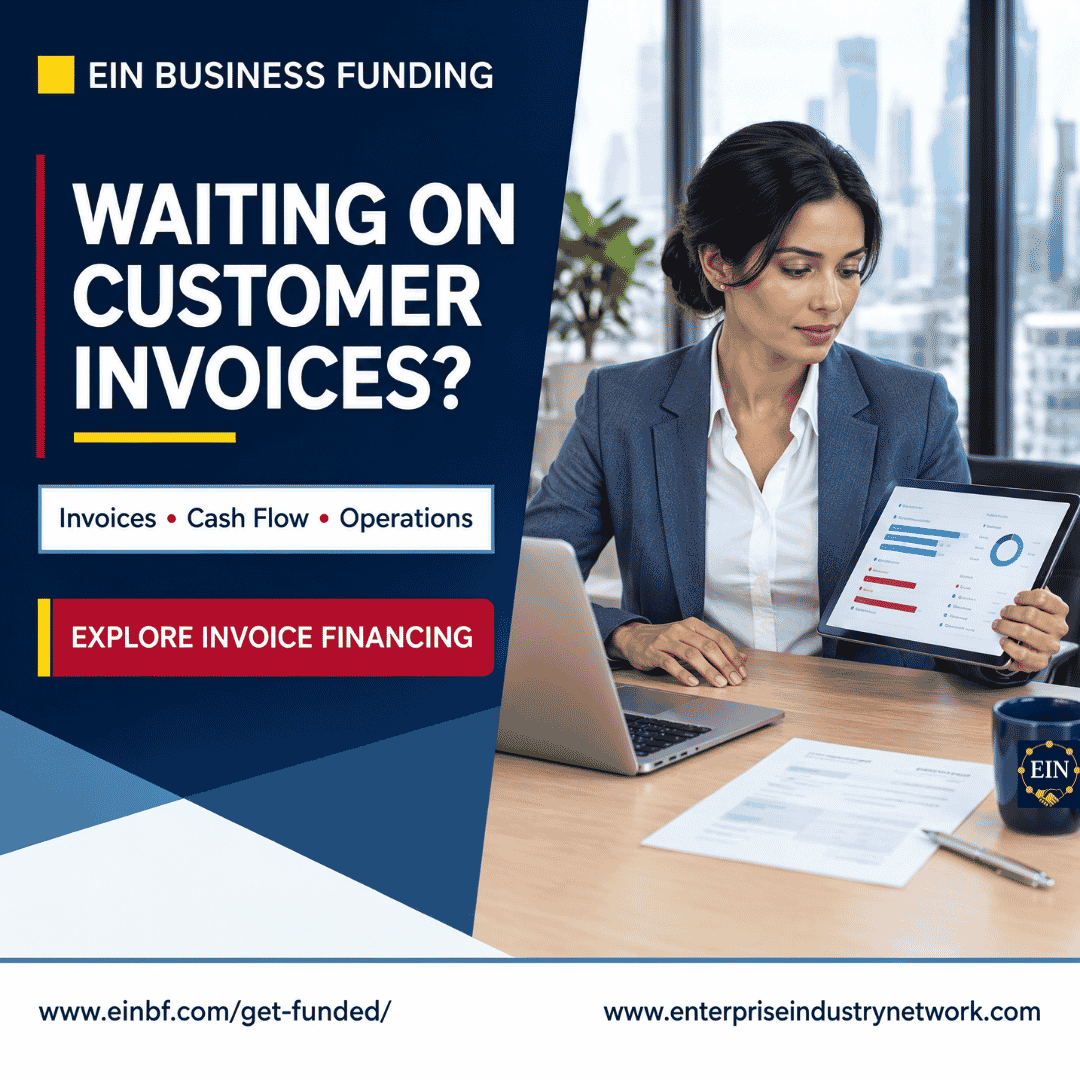
Invoice Financing With EIN: Can Unpaid Customer Invoices Help Support Business Cash Flow?
Nov 2, 2026
Waiting for customers to pay outstanding invoices?
A business can have revenue on paper and still experience a cash-flow problem.
The work may already be completed. The customer may already have been invoiced. But payroll, suppliers and other operating expenses can become due before the invoice is actually paid.
For eligible businesses, invoice financing may be one potential way to address that timing gap.
What Is Invoice Financing?
Invoice financing generally allows a business to seek financing based in part on eligible unpaid customer invoices or accounts receivable.
The exact structure varies by provider.
Rather than waiting until the customer pays under normal invoice terms, the business may be able to access a portion of the invoice value earlier, subject to eligibility, verification, fees and other provider requirements.
Why Businesses Explore Invoice Financing
Invoice financing can be relevant when the business has already earned revenue but has not yet collected the cash.
That timing difference can affect:
- Payroll
- Supplier payments
- Inventory
- Operating expenses
- New customer work
- Other short-term business needs
The issue is often not a lack of sales. It is the delay between generating the invoice and receiving the payment.
The Invoice Itself Matters
Invoice financing is different from simply applying for a general-purpose business loan.
Depending on the provider, the financing review may consider the receivable itself, including factors such as the invoice, customer, payment terms and whether the underlying goods or services have been delivered or completed.
Not every invoice or customer will necessarily qualify.
Business Information May Still Be Reviewed
Having an unpaid invoice does not automatically create a financing approval.
Requirements differ by provider, and the broader business profile may still be relevant.
Providers may request information about the business, its operating history, revenue, cash flow, existing obligations or other financial circumstances.
What About Invoice Financing With an EIN?
Business owners sometimes search for “invoice financing with EIN” because they want financing connected to their business entity and receivables.
An Employer Identification Number can help identify the business during an application.
However, an EIN alone does not determine whether invoice financing is available.
Eligibility may depend on the business, the invoice, the customer and the financing provider’s requirements.
Understand the Cost
Accessing money before the invoice is paid comes with a financing cost.
Before proceeding, understand:
- How much of the invoice may be advanced
- Fees or financing costs
- How repayment or collection works
- What happens if the customer pays late
- Any recourse or other obligations
Terms and structures can differ substantially among providers.
Invoice Financing Is About Cash-Flow Timing
A useful way to think about invoice financing is:
The business has generated a receivable, but the cash has not arrived yet.
If that delay is creating an operating constraint, invoice financing may be worth exploring among the available funding options.
EIN Business Funding provides a starting point for U.S. businesses exploring invoice financing and other potential funding solutions.
Funding availability, invoice eligibility, advance amounts, fees, recourse requirements and terms vary by provider and applicant circumstances. An inquiry, application or initial review does not guarantee financing.
Frequently Asked Questions
Can I finance an unpaid business invoice?
Potentially. Some financing providers offer invoice-based financing for qualifying receivables, but eligibility depends on the invoice, customer, business and provider requirements.
Can I get invoice financing with an EIN?
An EIN may be used to identify the business during an application, but an EIN alone does not establish eligibility. The provider may also evaluate the invoice, customer and broader business circumstances.
Does the customer have to pay the invoice eventually?
Yes. Invoice financing is based on an underlying receivable. The specific collection process, responsibilities and consequences of late or unpaid invoices depend on the financing structure and provider.
Is invoice financing the same as a traditional business loan?
Not necessarily. Invoice financing is generally connected to qualifying accounts receivable, while traditional loans may be evaluated primarily against the broader credit and financial profile of the borrower.
Take the Next Step
Subscribe on YouTube:
https://www.youtube.com/@enterpriseindustrynetwork
Explore EIN Business Funding:
https://www.einbf.com/get-funded/
Exit. Acquire. Invest.
Explore Enterprise Industry Network
https://enterpriseindustrynetwork.com/
Preparing for Investor Review? Make Sure Your Numbers Match Your Story

Oct 30, 2026
Preparing for investor conversations?
Your pitch deck may explain the opportunity.
Your financial information needs to support that story.
Potential investors may compare what management says about growth, traction and capital needs with the numbers behind the company.
That makes consistency an important part of investor readiness.
Start With the Metrics That Matter to Your Business
Not every company should present exactly the same metrics.
The relevant numbers depend on the company’s stage, business model and industry.
Depending on the business, founders may need to understand areas such as:
- Revenue
- Revenue growth
- Customer growth
- Recurring or repeat business
- Gross margin
- Operating expenses
- Cash position
- Customer concentration
- Other stage-specific operating metrics
The objective is not to fill the presentation with numbers. It is to know which numbers help explain the business.
Make Sure the Pitch and Financials Agree
If a pitch describes rapid growth, the supporting information should help explain that growth.
If the company says it has strong customer traction, founders should know what evidence supports that statement.
If the business is raising capital for expansion, the financial plan should connect that expansion to the proposed use of funds.
Inconsistency between the narrative and the numbers can create additional questions.
Know What Is Driving Revenue
For revenue-generating companies, the headline revenue number is only one part of the picture.
Founders may also need to understand what is driving that revenue.
Questions could include:
- Which products or services generate revenue?
- How concentrated is revenue among major customers?
- Is revenue recurring, transactional or project-based?
- What trends are visible over time?
- What factors are influencing growth?
The right level of detail depends on the company and investor.
Understand Spending and Cash Requirements
Investor readiness also means understanding where the company’s money is going.
Founders should be able to explain major operating expenses and how those expenses relate to the company’s current stage and strategy.
This becomes especially important when the company is raising capital to extend runway, build a team, develop a product or expand operations.
Know Your Runway
For companies using more cash than they currently generate, runway can become an important part of the capital conversation.
Founders should understand their current cash position, expected spending and how long available resources may support the company’s plan.
A capital request should connect logically to that financial reality.
Be Ready to Explain the Forecast
Projections are based on assumptions.
Investors may therefore want to understand what those assumptions are.
For example:
- What is expected to drive future revenue?
- What hiring is assumed?
- What sales or marketing investment is planned?
- What product milestones are expected?
- What costs are expected to increase?
The objective is not to guarantee future performance.
It is to show how management arrived at the forecast.
Connect the Capital Ask to the Financial Plan
The amount being raised should not exist separately from the company’s numbers.
The founder should be able to explain:
- How much capital is being sought
- Why that amount is appropriate
- How the capital is expected to be used
- What period or milestones it is intended to support
The capital request, use-of-funds plan and financial forecast should support the same underlying strategy.
Know the Weak Points Too
Investor readiness is not about pretending every metric is perfect.
A business may have customer concentration, uneven growth, developing margins, a short operating history or other risks.
Founders should understand those issues and be prepared to discuss them clearly.
A realistic explanation is generally more useful than avoiding a question that may emerge during review.
Prepare for Follow-Up Questions
A good investor conversation often produces additional questions.
Founders may be asked to explain:
- Changes in revenue
- Customer concentration
- Expense growth
- Cash requirements
- Forecast assumptions
- Capital allocation
- Operating risks
Being able to answer those questions requires familiarity with the business beyond the presentation itself.
The Numbers Should Support the Story
An investor presentation can describe where the company is going.
The financial information helps explain where the company is today and what may be required to move forward.
The strongest preparation comes when the business story, financial story and capital strategy are aligned.
EIN Venture Capital provides a starting point for businesses preparing for investor conversations, capital readiness and potential capital-source alignment.
Investor mandates, interest, valuation, due diligence, terms and investment decisions vary by investor and opportunity. Financial projections are forward-looking estimates and do not guarantee future performance. An inquiry, meeting or introduction does not guarantee investment or funding.
Frequently Asked Questions
What financial information should founders understand before meeting investors?
The relevant information depends on the company, but founders may need to understand revenue, growth, operating expenses, cash position, runway, customer concentration, projections and other business-specific metrics.
Why do investors compare the pitch deck with financial information?
Financial and operating information can help investors evaluate whether the numbers support the company’s claims about traction, growth, capital needs and future plans.
Do financial projections need to be guaranteed?
No. Projections are estimates based on assumptions. Founders should be able to explain those assumptions rather than present forecasts as guaranteed outcomes.
Why should the capital ask match the financial plan?
The amount being raised, use of funds and expected milestones should connect logically to the company’s operating requirements and broader strategy.
Take the Next Step
Subscribe on YouTube:
https://www.youtube.com/@enterpriseindustrynetwork
Preparing your business for investor review?
Get Started with EIN Venture Capital:
https://www.einvc.com/get-capital/
Exit. Acquire. Invest.
Explore Enterprise Industry Network
https://enterpriseindustrynetwork.com/
Received a Letter of Intent to Buy Your Business? Read Beyond the Price

Oct 29, 2026
Received a Letter of Intent to buy your business?
Seeing an attractive purchase price can naturally draw most of the attention.
But a Letter of Intent, often called an LOI, can contain much more than a headline number.
Before moving deeper into a transaction, a seller should understand what the buyer is actually proposing.
What Is a Letter of Intent?
A Letter of Intent generally outlines important proposed terms for a potential business acquisition before the parties move further into due diligence and final transaction documentation.
The exact structure and legal effect of an LOI vary by transaction.
Some provisions may be intended as preliminary, while others may create obligations depending on how the document is written. Qualified legal counsel should review the actual document.
Start With the Purchase Price — Then Keep Reading
The proposed price matters, but sellers should understand how that price is expected to be paid.
A transaction may involve:
- Cash at closing
- Buyer financing
- Seller financing
- Deferred payments
- Contingent payments
- Other transaction-specific structures
Two proposals with the same headline price can therefore represent very different financial outcomes.
Understand What Is Being Purchased
The LOI may address how the proposed transaction is expected to be structured.
Depending on the deal, the buyer may be proposing to purchase certain business assets, ownership interests or another defined package of rights and obligations.
Sellers should understand exactly what is contemplated before assuming that two offers are directly comparable.
Look at Financing Conditions
If the buyer expects to use acquisition financing, the proposed transaction may depend partly on obtaining that financing.
A seller should understand whether financing is part of the proposal and whether the buyer’s financing process could affect timing or closing certainty.
Financing availability is never automatic merely because an LOI has been signed.
Review the Due Diligence Expectations
An LOI often precedes a more detailed due diligence process.
The buyer may request financial, operational, legal, customer, employee, contract or other business information.
The seller should understand:
- What information may be requested
- How long the review is expected to take
- How sensitive information will be handled
- Who will have access to the information
Understand Any Exclusivity Provision
Some proposed transactions may include a period during which the seller agrees not to pursue other buyers or competing offers.
Because an exclusivity provision can affect the seller’s ability to engage with other parties, its scope and duration deserve careful attention.
Legal counsel should review the specific language and obligations.
Pay Attention to Transition Expectations
The buyer may expect the seller to remain involved after closing.
That could involve customer introductions, employee transition, training, operational support or other responsibilities.
A seller should understand how much post-closing involvement is being proposed and whether it fits the owner’s own plans.
Look at Timing and Closing Conditions
The LOI may also outline an expected timeline and conditions that need to be satisfied before closing.
Those conditions can vary significantly from one transaction to another.
A target closing date should therefore not be treated as a guaranteed closing date.
An LOI Is an Important Step — Not the Finish Line
A Letter of Intent can indicate that a buyer is serious enough to put proposed transaction terms in writing.
But substantial work may still remain, including:
- Due diligence
- Financing
- Negotiation
- Legal documentation
- Closing conditions
- Transition planning
The transaction can still change or fail to close.
Evaluate the Complete Proposal
When reviewing an LOI, sellers can benefit from looking beyond one number.
Consider the complete proposed transaction:
- Price
- Payment structure
- Financing
- Conditions
- Due diligence
- Exclusivity
- Timing
- Seller transition
EIN Business Brokers provides a starting point for business owners considering a sale and navigating the transaction process.
Business valuations, proposed terms, financing, legal obligations, negotiations and closing outcomes vary by transaction. An LOI, offer or buyer discussion does not guarantee a completed sale. Sellers should obtain appropriate legal, tax and accounting advice for their specific transaction.
Frequently Asked Questions
Does signing a Letter of Intent mean my business is sold?
No. An LOI can be an important transaction milestone, but due diligence, financing, negotiation, final agreements and other closing conditions may still remain.
Should I look at more than the purchase price in an LOI?
Yes. Sellers may also need to consider payment structure, financing conditions, due diligence, timing, exclusivity, transition requirements and other proposed terms.
Is every part of a Letter of Intent legally binding?
Not necessarily. The legal effect of individual provisions depends on the specific document and applicable law. Sellers should have qualified legal counsel review the LOI before signing.
Can a deal change after the LOI is signed?
Yes. Due diligence findings, financing, negotiations and other circumstances may affect the proposed transaction before final agreements and closing.
Take the Next Step
Subscribe on YouTube:
https://www.youtube.com/@enterpriseindustrynetwork
Thinking about selling your business?
Get Started with EIN Business Brokers:
https://www.einbb.com/get-started/
Exit. Acquire. Invest.
Explore Enterprise Industry Network
https://enterpriseindustrynetwork.com/
Applying for Business Funding? Why Lenders Ask About Revenue, Debt and Use of Funds

Oct 28, 2026
Applying for business funding?
You may be asked for much more than your business name and the amount you want to borrow.
A financing provider may want to understand the company, why capital is needed and how another financial obligation could fit into the business.
Why Does the Application Ask About Your Business?
Business financing is generally evaluated in the context of the company requesting it.
Information such as business formation date, industry, ownership and operating history can help establish what type of business is applying and how long it has been operating.
Why Revenue Matters
Annual revenue gives a financing provider one view of the scale of the business.
But revenue alone does not tell the entire story.
A company may generate meaningful sales while also carrying significant expenses or experiencing uneven cash flow.
Why Cash Flow Matters
Financing creates a repayment obligation.
That makes cash flow important because a provider may want to understand whether the business appears capable of supporting another payment alongside its normal expenses.
Depending on the financing product, bank activity or other financial information may be requested to help evaluate that picture.
Why Existing Debt Is Asked About
A business may already have credit cards, loans, equipment financing or lines of credit.
Those obligations matter because any new financing would be added to what the company already owes.
Owners should therefore be prepared to identify existing balances and other financing commitments accurately.
Why the Use of Funds Matters
“I need money for my business” is usually less informative than a clearly defined funding purpose.
The financing need might involve:
- Working capital
- Equipment
- Inventory
- Expansion
- Acquisition
- Other business-specific requirements
The amount requested should ideally make sense relative to the purpose of the financing.
Why Documents May Be Requested
Different financing products have different documentation requirements.
Depending on the provider and financing type, a business may be asked for information such as bank statements, profit-and-loss information, financial statements, tax information or other supporting records.
The purpose is generally to support and verify information used during the financing review.
Keep the Information Consistent
One practical step is to make sure the information supplied across the application and supporting documents is consistent.
The business name, entity details, revenue information, requested amount, use of funds and existing obligations should reflect the actual business situation.
If something requires explanation, it is better to address it clearly than to leave conflicting information unexplained.
A Detailed Application Is Part of the Review Process
Questions about revenue, cash flow, debt or use of funds are not simply paperwork.
They help create a clearer picture of:
- The business requesting financing
- The amount being requested
- The reason capital is needed
- The company’s existing obligations
- The broader ability to support financing
EIN Business Funding provides a starting point for business owners exploring potential financing solutions and preparing for the funding process.
Funding availability, eligibility, documentation requirements, costs and terms vary by provider and applicant circumstances. Providing information or submitting an application does not guarantee financing.
Frequently Asked Questions
Why do business funding applications ask for annual revenue?
Revenue can help a financing provider understand the size and operating activity of the business, although other factors such as cash flow and existing obligations may also be considered.
Why does a lender ask about existing business debt?
Existing loans, credit cards, lines of credit and other obligations can affect the company’s overall financial position and ability to support additional financing.
Why do I need to explain how business funding will be used?
A clear use of funds helps connect the amount requested with a specific business need such as equipment, inventory, working capital, expansion or another operating purpose.
Will every financing provider require the same documents?
No. Documentation and qualification requirements vary by financing product, provider and applicant circumstances.
Take the Next Step
Subscribe on YouTube:
https://www.youtube.com/@enterpriseindustrynetwork
Explore EIN Business Funding:
https://www.einbf.com/get-funded/
Exit. Acquire. Invest.
Explore Enterprise Industry Network
https://enterpriseindustrynetwork.com/
Powered by the Enterprise Industry Network
EINEdge is the central source for Enterprise Industry Network social updates. EIN Business Listings brings these posts together with insights on opportunity discovery, listing visibility, and buyer-facing presentation.
Visit EINEdge InsightsEngage With the EIN Ecosystem
Whether you are exploring opportunities, preparing for a transaction, or seeking disciplined advisory support, EIN provides clarity at every step.